Child Wellbeing & School Policy • 5 min read
The science behind heavy school bags, the cost of evening homework, and how Monarch protects your child's body, mind, and family time.
Every weekday morning, a scene repeats itself in millions of Pakistani homes. A child — perhaps seven, perhaps ten — stands at the door, bent slightly forward under the weight of a bag that contains textbooks, notebooks, a lunchbox, stationery, and the invisible weight of whatever homework was assigned the night before. They are going to school to learn. But before the first lesson even begins, their spine is already under stress, their shoulders already aching, and their energy already being spent just carrying the load from the front door to the school gate.
At Monarch Education System, we looked at this picture carefully — and decided to change it completely.
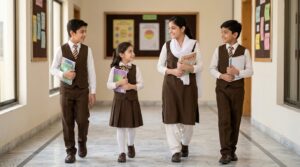
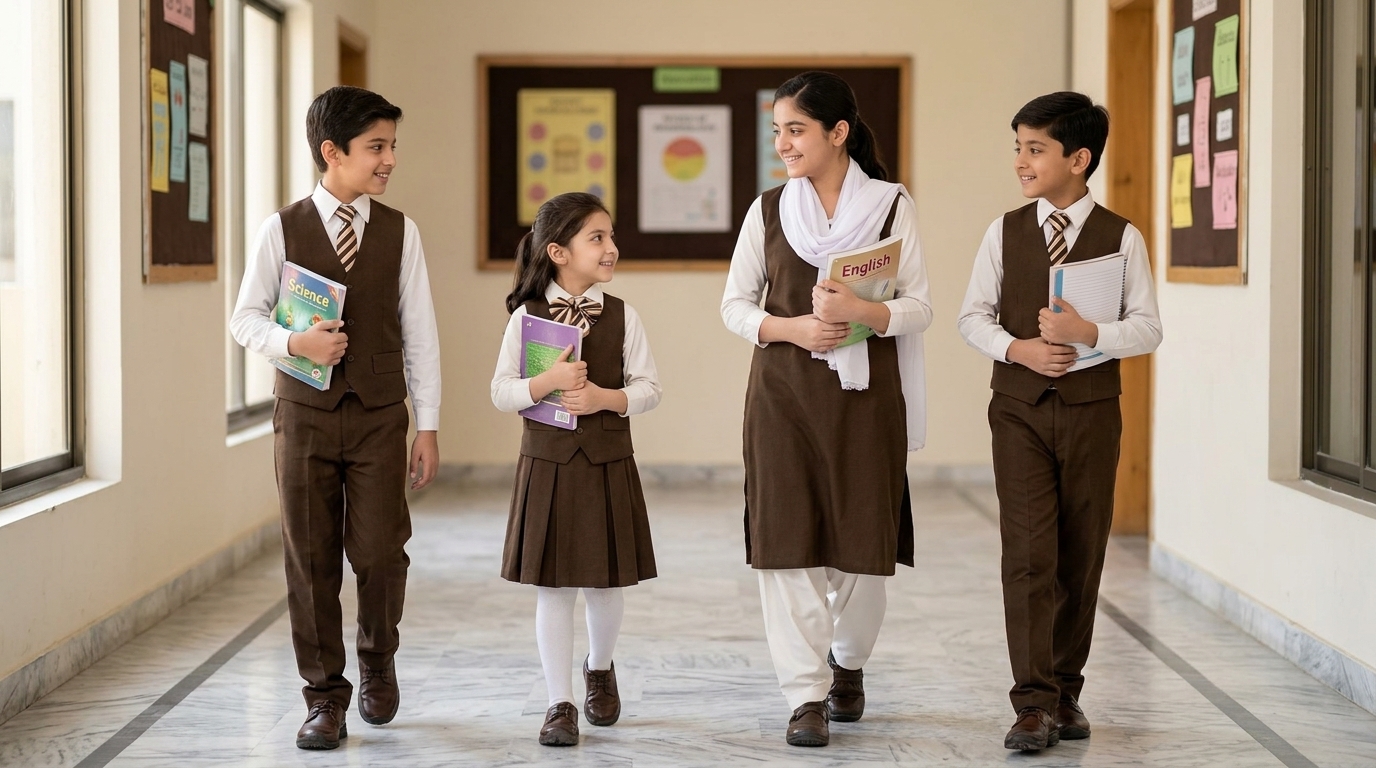
At Monarch, your child's bag stays at school. All work is completed during school hours, by qualified teachers, in the right learning environment. Your child comes home with nothing but energy, stories, and a smile.
The Burden in Numbers
The Physical Damage: What a Heavy Bag Does to a Growing Body
Children's bodies are not small adult bodies. Their spines are still forming, their bones are less dense, their muscles are still developing, and their growth plates remain open and vulnerable. Loading this developing system with excessive, repeated daily weight is not neutral. It causes real, measurable harm.
1. Spinal Compression and Postural Distortion
A comprehensive review of 22 studies published in PubMed, covering 1,159 children aged 7 to 27, confirmed that the added load of a backpack and the resulting changes in spinal posture impose considerable demand on internal tissues and result in significant spinal loads. When a child carries a heavy bag, the body automatically compensates by leaning forward at the hips to shift the centre of gravity. This produces a chain of damaging postural adaptations: the lower back flattens, the upper back rounds, and the head pushes forward.
Research on cervical posture in children found that bag carriage measurably reduces the craniovertebral angle — the angle between the head and neck — indicating that children are pushing their heads forward under load. What makes this particularly serious is the finding that this altered posture can become habitual: the child begins to maintain the hunched, forward-leaning position even after the bag is removed, as the muscles and joints adapt to the unnatural alignment.
2. Back, Neck and Shoulder Pain in Children as Young as 7
A study of 500 school children in Bangalore found that students carried bags averaging 6.53 kg — approximately 13.5% of their body weight. Pain was reported by 50.9% of boys and 63.9% of girls. Among girls from private schools, the figure reached a troubling 88.2%. These are not teenagers — many are primary school children whose musculoskeletal systems are at their most vulnerable stage of development.
The recommended safe maximum for school bag weight is 10% of a child's body weight. Yet studies consistently show that the majority of children regularly carry 15–30% of their body weight — equivalent, proportionally, to an adult carrying a 15–25 kg load every single day.
3. Compressed Lungs and Reduced Breathing Capacity
The physical effects of heavy bags are not limited to the spine. Research published in peer-reviewed journals found that heavy backpack carriage compresses the thoracic region — the chest — reducing pulmonary function and diminishing breathing capacity. A child arriving at school after walking with a heavy bag is not only physically fatigued; their lungs are literally under pressure. They arrive at their desk already compromised.
4. Nerve Compression and Reduced Coordination
Carrying heavy, unbalanced loads also reduces proprioception — the body's sense of its own position in space. This increases the risk of trips, falls, and injuries, particularly on staircases. Tight shoulder straps can compress nerves and blood vessels in the shoulder and arm, causing tingling, numbness, and muscle weakness.
Unlike adult workers — who are legally protected from carrying loads exceeding safe weight limits — school children carry proportionally far heavier loads, every day, for up to 12 years. There are no laws protecting them. At Monarch, we protect them anyway.
The Homework Burden: Why Bringing Work Home Harms Children and Families
The heavy bag is not only a physical problem — it is a symbol of something deeper. It represents the expectation that a child's school day does not end at the school gate. That learning must continue into the evening. That the family home must become a second classroom. This expectation, however well-intentioned, carries serious consequences.
The Evening Belongs to the Child
A child who attends school from 8am to 3pm has already given seven hours of concentrated mental effort. Research shows that children — especially those in primary and middle school — require unstructured time after school for emotional regulation, creative play, physical activity, and family connection. These are not luxuries. They are developmental necessities.
Homework Creates Stress — for Children and Parents
The presence of evening homework creates a nightly stress cycle in millions of families. The child is tired and resistant. The parent must now supervise, explain, and enforce. Dinner is rushed. Bedtime is late. Sleep is shortened. The next morning, the child is tired, and the cycle begins again. Research makes the stakes clear: children getting insufficient sleep due to homework show measurable declines in concentration, emotional regulation, and academic performance the following day.
Homework Damages the Parent-Child Relationship
Some of the most damaging effects of homework are invisible: the arguments it causes, the anxiety it produces, and the quality time it displaces. Research on family wellbeing consistently shows that unstructured family time — sharing a meal, playing together, simply talking — is among the most powerful contributors to a child's emotional security and long-term mental health. At Monarch, we refuse to let school work steal the evening from your family.
The Monarch Approach: Work Done Right, Done at School
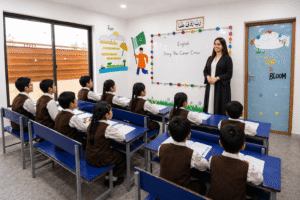
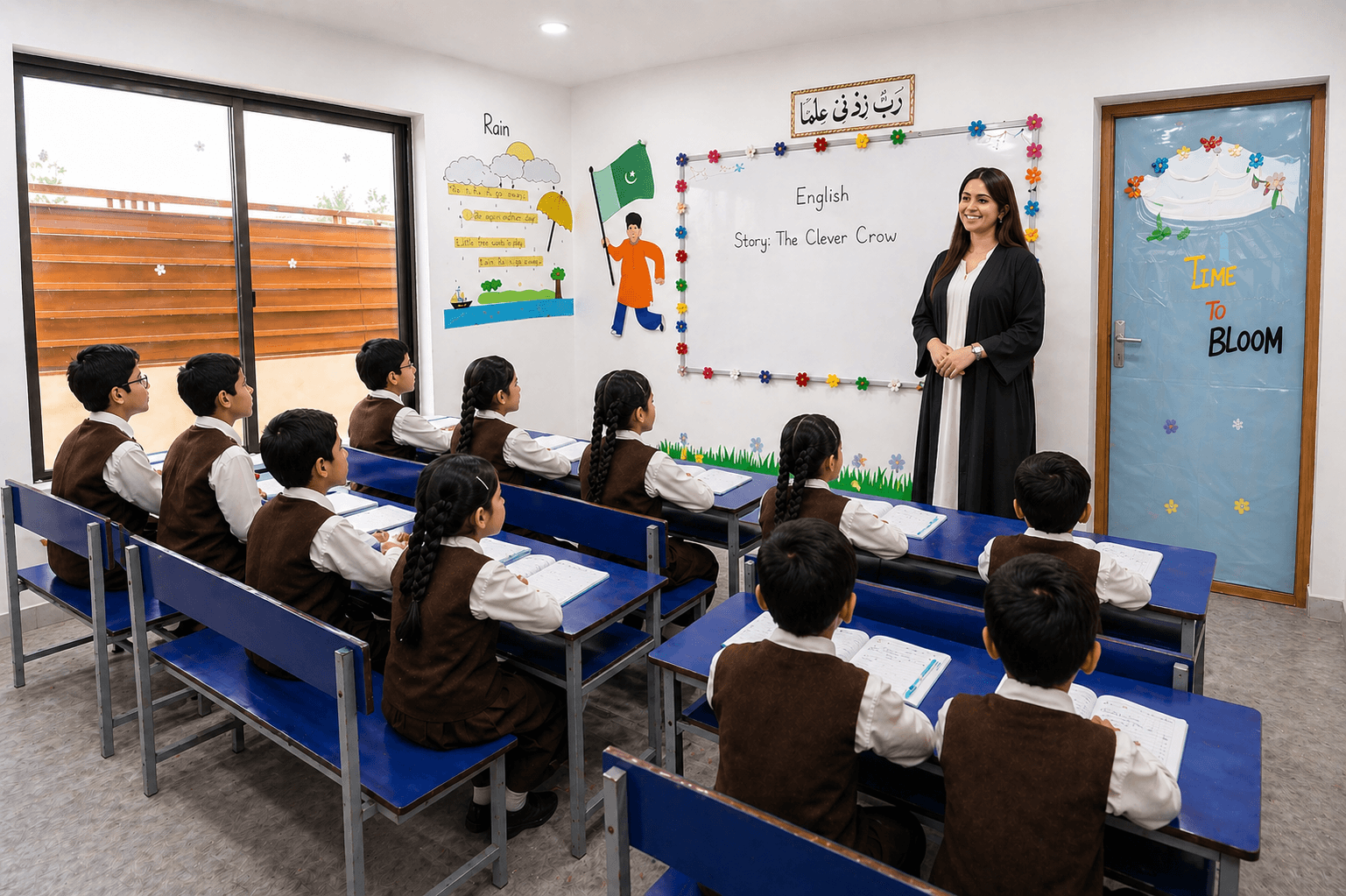
At Monarch, all assigned work is completed during school hours — under the supervision of qualified, trained teachers, in the proper learning environment, with the right resources available. This is not simply a convenience. It is a pedagogical commitment rooted in evidence.
When work is completed at school, children receive immediate feedback and correction from their teacher — not hours later at home, when the learning moment has passed. Misunderstandings are caught and addressed in real time.
What this means in practice:
- No bag to carry home. Your child's books, notebooks, and materials stay safely in their personal space at school. Every morning they arrive free, light, and ready to learn.
- No homework battles. The evening belongs to your child and your family. There is no nightly negotiation, no parental stress, no late nights over notebooks.
- Better quality work. Work completed at school, with a teacher present, is done correctly and with understanding — not rushed or copied in the evening.
- Healthier sleep. With evenings free from homework, children go to bed at the right time, sleep fully, and arrive at school genuinely refreshed.
- Stronger family bonds. The hours after school are yours. Eat together, play together, talk. These moments matter more than any worksheet.
Traditional School vs. The Monarch Way
| Traditional School ✗ | The Monarch Way ✓ |
|---|---|
| Heavy bag every day | Bag stays safely at school |
| Homework stress every evening | All work completed at school |
| No time to play or rest | Evenings free for play & family |
| Poor posture from daily load | Natural posture protected |
| Back, neck & shoulder pain | Healthy spine & shoulders |
| Exhausted mind at home | Fresh, rested mind every day |
| Less family bonding time | More quality family time |
| Sleep disrupted by homework | Proper sleep every night |
| Child dreads school mornings | Child looks forward to school |
| Energy drained before learning | Full energy for learning |
A Global Shift: The World Is Lightening the Load
Monarch is not alone in this approach. Educational systems around the world are waking up to the physical and emotional harm caused by heavy bags and excessive homework. Finland — the country with one of the highest-performing education systems on earth — assigns minimal homework and places heavy emphasis on play, rest, and family time. The results speak for themselves.
In India, the Maharashtra State Government issued a formal resolution on reducing school bag weight after research highlighted the alarming prevalence of musculoskeletal pain in schoolchildren. Across the UK, Europe, and progressive schools in Southeast Asia, bag-free and homework-free policies are being adopted not as a relaxation of standards, but as a recognition that child wellbeing and academic excellence are not in conflict — they are inseparable.
A Lighter Back. A Happier Child. A Stronger Family.
The image of a young child bent under the weight of a school bag is so familiar that we have stopped questioning it. We have accepted it as simply what school looks like. But it does not have to look this way.
At Monarch Education System, we believe that a child who walks freely, who plays in the evening, who sleeps fully, who eats dinner with their family without a pile of homework waiting — that child will learn better, grow stronger, and thrive more completely than a child weighed down by the daily burden of a heavy bag and an endless to-do list.
We are not lowering our standards. We are raising our care. At Monarch, every child leaves school each day standing tall — in posture, in confidence, and in spirit.
Admissions Open for 2026
Give your child the education they deserve. Apply online or reach out today.
Apply Now WhatsApp Us